
virtual reality medical hypnosis: a winning combination for health
%25201.avif)
Having discussed the principles of medical hypnosis in a previous article, we will now explore how this practice can benefit from advances in virtual reality.
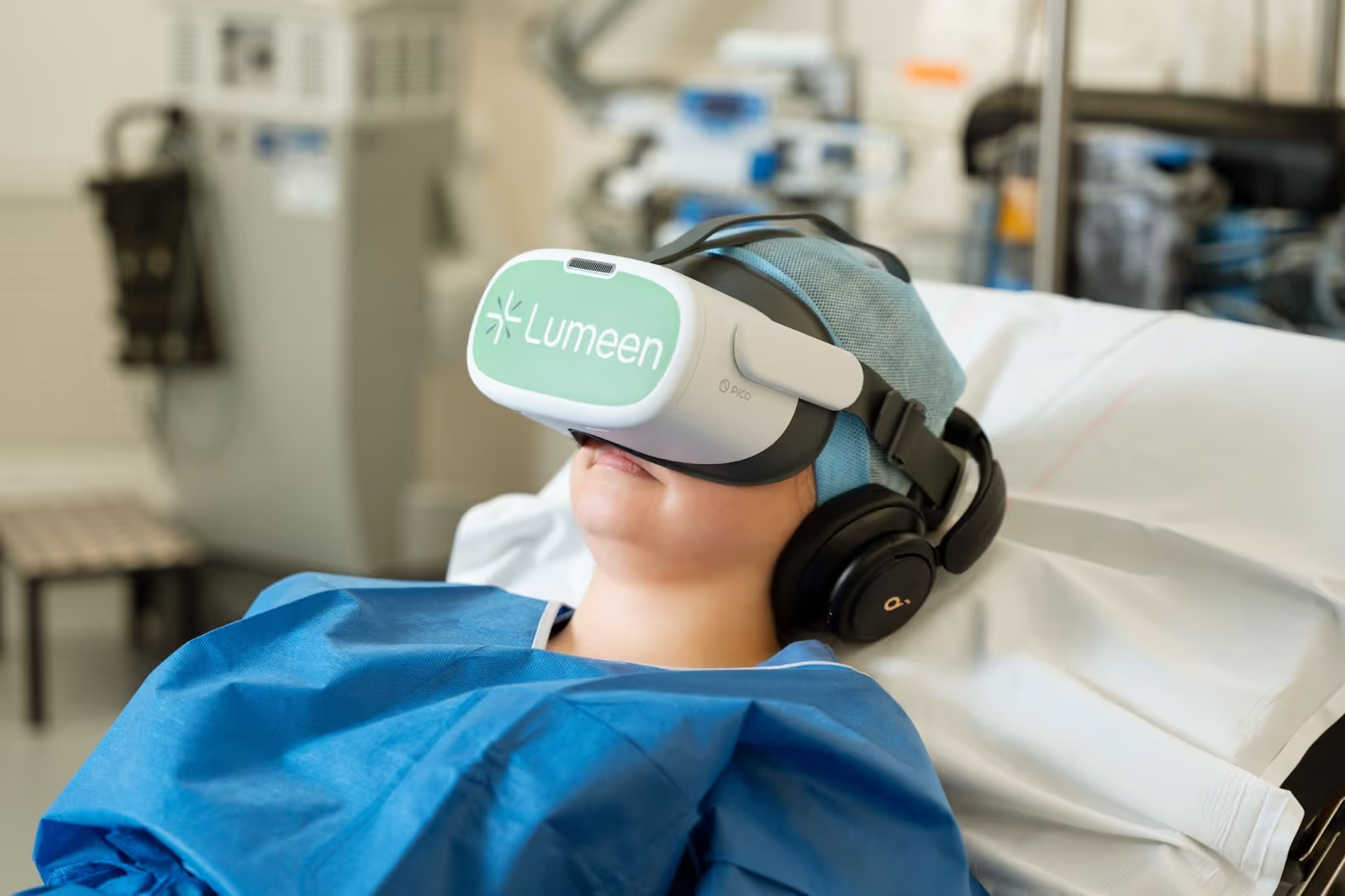
The principle behind virtual reality is to use virtual reality Headsets virtual reality create an immersive environment conducive to a hypnotic state. The patient is immersed in a virtual world designed to stimulate visualization, induce relaxation , and promote heightened concentration. Hypnotic suggestions are then integrated into this environment, guiding the user toward an altered state of consciousness.
The Benefits of virtual reality Hypnosis for Patients
virtual reality hypnosis sessions virtual reality often perceived as more engaging and enjoyable, whichimproves the patient experience by increasing adherence to protocol and overall satisfaction. By making the hypnosis session more enjoyable, virtual reality , among other things, help engage patients who might be reluctant or unable to participate in traditional hypnosis sessions, such as children or anxious individuals.

Thanks to virtual reality, hypnotic scenes come to life in the form of immersive environments. This helps overcome the visualization difficulties some patients may experience and reinforces the anchoring of hypnotic suggestions. With the addition Headphones , it is also possible to further isolate the patient by blocking out external sounds, which can be particularly useful in the operating room, for example. virtual reality the creation of safe, controlled therapeutic environments, ideal for any anxiety-inducing situation within a reassuring setting.
The combination of hypnosis and virtual reality the field of pain anxiety managementanxiety growing interest [1], [2]. Several studies have demonstrated that combining these two techniques significantly reduces pain intensity, both in experimental and clinical settings for the management of acute, chronic, and neuropathic pain, in hospitals or in Homecare 3], [4], [5], [6], [7].
A study conducted in 2014 compared the effectiveness of hypnoanalgesia and virtual reality reducing pain individuals with varying levels of hypnotizability [8]. One hundred twenty female students were divided into four groups: a control group, a group using virtual reality (the game Snow World) during painful stimulation, a group receiving a hypnosis session concurrent with the stimulation, and a final group combining preliminary hypnosis and virtual reality. The results showed that the three intervention groups (virtual reality, hypnosis, and a combination of both) were significantly more effective at reducing pain the control group. However, the effectiveness of hypnosis varied depending on the participants’ level of hypnotizability: highly hypnotizable individuals benefited more from this technique. In contrast, virtual reality effective in reducing pain all participants, regardless of their level of hypnotizability.
It is important to note that while the results are promising, further research is needed to better understand the mechanisms of action underlying the combination of medical hypnosis and virtual reality to identify the patient populations that would benefit most from it. Furthermore, the establishment of standardized protocols is essential to ensure the reproducibility of the results and to facilitate the integration of this approach into clinical practice.
The Benefits of virtual reality Hypnosis for Healthcare Facilities
virtual reality Headsets , such as Lumeen, offer caregivers innovative tool to incorporate into their practice of medical hypnosis. They can also be combined with other non-pharmacological techniques, such as cardiac coherence or music therapy, to provide multimodal non-pharmacological therapies.
This helps make medical hypnosis more widely accessible. Before these tools became available, only professionals trained in medical hypnosis could offer sessions. However, there are not enough trained professionals to meet the needs of all patients. virtual reality solution interesting solution : in less than two minutes, it allows any healthcare provider to offer a medical hypnosis session to their patients.
virtual reality also virtual reality to standardize hypnosis sessions, ensuring consistent and reproducible quality. In addition, the hypnotic scripts for these immersive experiences are available in multiple languages, making it possible to offer medical hypnosis sessions to an international patient base.
However, it is essential to emphasize that virtual reality no way virtual reality the hypnotherapist’s expertise. The headset can even be used prior to the hypnotherapist’s session. By creating an immersive environment, the immersive experience facilitates the induction and deepening of the hypnotic state, thereby optimizing the effectiveness of the hypnotherapist’s intervention. For example, the headset can be used preoperatively to prepare patients, allowing the healthcare professional to focus on personalized support during the session.
"The virtual reality headset virtual reality a gateway to hypnosis; a deeply relaxed person is easier to hypnotize, and this helps condition them to regulate their breathing and stay relaxed before a traditional hypnosis session."
Karin Buyst - Hypnotherapist who uses the Cayceo method (formerly Ipneo)
In addition, the practice of medical hypnosis requires sustained concentration on the part of the hypnotherapist, which can lead to fatigue. The hypnotherapist can "take a break" using the headset when they are unable to conduct a session or when there is a staff shortage and they need to be freed up to do other tasks.
virtual reality offer an interesting alternative for people who are not easily hypnotized, either as a complement to or a replacement for hypnosis, in the management of pain anxiety. While both hypnosis and virtual reality to reduce pain anxiety, they do so through different mechanisms. Hypnosis relies on the individual’s ability to focus on suggestions, while virtual reality an immersive environment that diverts attention. Nevertheless, further research is still needed to clarify the differences and potential synergies between virtual reality hypnosis. To learn more about the mechanism behind virtual reality distraction power virtual reality pain management, pain as specific clinical cases, refer to this article.
Healthcare staff can also use virtual reality relax during their breaks, thereby helping to improve their quality of life at work.
However, the introduction of this technology in a clinical setting raises organizational challenges. In particular, time must be set aside for implementation (preparation, cleaning, and storage of equipment), and the equipment must be secured to prevent theft.
virtual reality Hypnosis at Lumeen
We offer virtual reality solutions tailored to the healthcare sector.
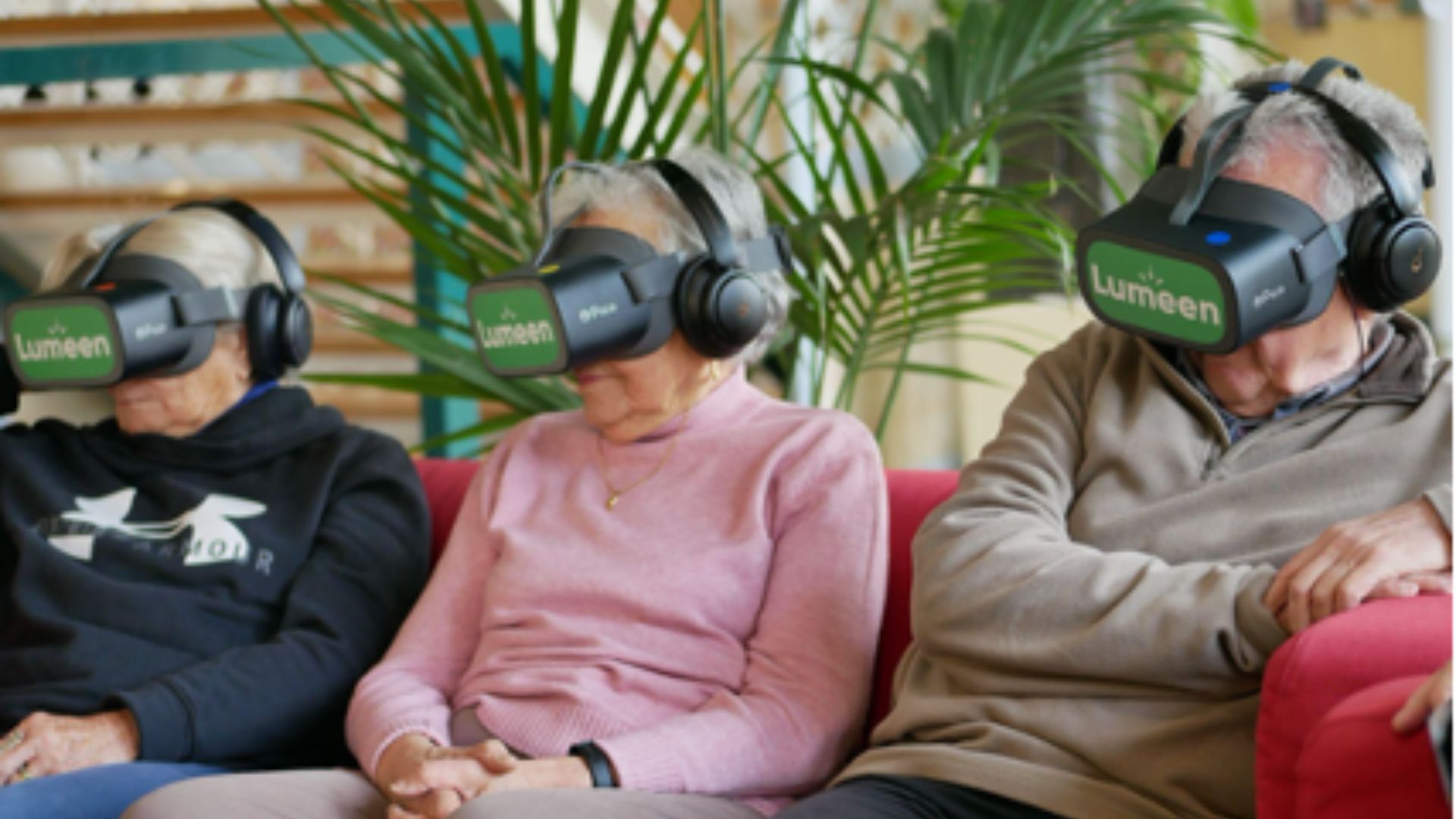
Our Relaxation module was developed in collaboration with anesthesiologists and hypnotherapists from the Groupement Hospitalier Sud des Hospices Civils de Lyon to help distract patients fromanxiety pain , during, and after complex and anxiety-inducing medical procedures . It combines calm and soothing environments (beaches, mountains, walks by the lake, etc.) with music therapy and verbal guidance based on concepts of medical hypnosis. Initially designed for managinganxiety pain hospitals, it is also well-suited for care homes nursing facilities during nursing care or for relaxation sessions, whether individual or group-based. These experiences, available in 5 languages, offer an solution to promote well-being and relaxation
We also acquired Cayceo in late 2022 to expand our catalog of immersive experiences with medical hypnosis. Cayceo’s experiences are based on the same principles as the Relaxation module Relaxation soothing landscapes, gentle music, and a voice guide (Cloudy the Cloud) accompany the patient on a relaxing journey. Particularly well-suited for children thanks to their polished and colorful design, these experiences were developed in collaboration with psychologists and intensive care physicians, under the scientific direction of Prof. Antoine Bioy (Chief Scientific Officer at IPNOSIA). The scenarios and scripts offered are varied and adaptable to different situations: hypnoanalgesia, hypnosedation, and hypnorelaxation. Scripts using informal address are also available for Pediatrics.

To request a demo, click here.
The key takeaway on virtual reality hypnosis
virtual reality
- Is an innovative tool for practicing hypnosis that integrates easily into treatment protocols,
- Makes hypnosis more accessible by offering pleasant and engaging experiences that enhance the overall patient experience,
- Democratizes the use of medical hypnosis in hospitals and helps standardize it,
- It does not replace a hypnotherapist, but it canenhance their work.
Photo credit: Coline Bachelier
References
[1] H. Jafarizadeh, M. Lotfi, F. Ajoudani, A. Kiani, and V. Alinejad, “Hypnosis for the reduction of background pain and pain anxiety in men with burns: A blinded, randomized, placebo-controlled study,” Burns, vol. 44,no. 1, pp. 108–117, Feb. 2018, doi: 10.1016/j.burns.2017.06.001.
[2] K. E. Valentine, L. S. Milling, L. J. Clark, and C. L. Moriarty, “The Efficacy of Hypnosis as a Treatment for Anxiety: A Meta-Analysis,” Int. J. Clin. Exp. Hypn., vol. 67,no. 3, pp. 336–363, July 2019, doi: 10.1080/00207144.2019.1613863.
[3] C. Kendrick et al., “Hypnosis for Acute Procedural Pain: A Critical Review,” Int. J. Clin. Exp. Hypn., vol. 64,no. 1, pp. 75–115, Jan. 2016, doi: 10.1080/00207144.2015.1099405.
[4] C. Terzulli et al., “Virtual reality hypnosis diminishes experimental cold pain and alters autonomic responses,” Front. Pain Res., vol. 4, p. 1237090, Nov. 2023, doi: 10.3389/fpain.2023.1237090.
[5] T. Maddox et al., “In-home virtual reality program for chronic low back pain: durability of a randomized, placebo-controlled clinical trial at 18 months post-treatment,” Reg. Anesth. Pain Med., p. rapm-2022-104093, Nov. 2022, doi: 10.1136/rapm-2022-104093.
[6] S. Moreau et al., “Virtual Reality in Acute and Chronic Pain Medicine: An Updated Review,” Curr. Pain Headache Rep., Apr. 2024, doi: 10.1007/s11916-024-01246-2.
[7] P. D. Austin and P. J. Siddall, “Virtual reality for the treatment of neuropathic pain in people with spinal cord injuries: A scoping review,” J. Spinal Cord Med., vol. 44,no. 1, pp. 8–18, Jan. 2021, doi: 10.1080/10790268.2019.1575554.
[8] V. Enea, I. Dafinoiu, D. Opriş, and D. David, “Effects of Hypnotic Analgesia and Virtual Reality on the Reduction of Experimental Pain Among High and Low Hypnotizables,” Int. J. Clin. Exp. Hypn., vol. 62,no. 3, pp. 360–377, July 2014, doi: 10.1080/00207144.2014.901087.
Want to test Lumeen for 30 days with no commitment? ?


.jpg)