fall prevention virtual reality an innovative approach
The Art of Staying Active: An Immersive Prevention Program to Preserve Independence and Improve Quality of Life for Seniors
Preventing falls without overreacting, without treating seniors like children, and above all without getting bogged down in theory: that is the goal of *The Art of Staying Active*, a program designed to help seniors better identify everyday risks and take concrete action.
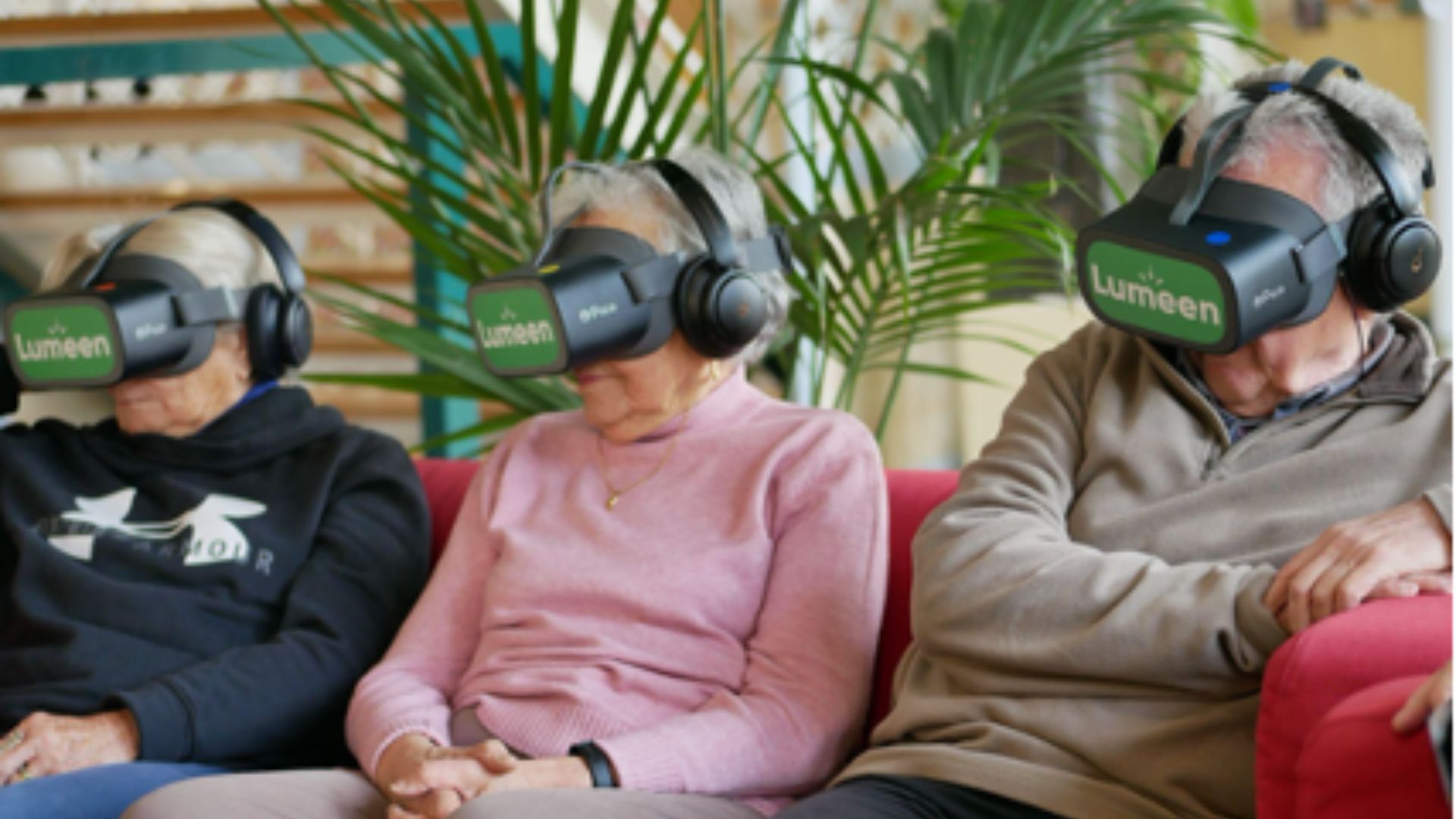
At Lumeen, we developed this project to move away from traditional approaches that are sometimes perceived as guilt-inducing or unengaging. The project is based on a simple principle: making prevention more tangible, positive, and memorable by combining virtual reality , guidance from occupational therapists, and practical educational tools. This methodology was co-developed with elderly people occupational therapists from Merci Julie to best meet the expectations and needs of care recipients.
An initiative that is part of policies aimed at promoting healthy aging
“The Art of Staying Active” aligns with several national frameworks for preventing the loss of independence. The project is consistent with the “Aging Well 2023–2027” roadmap, the guidelines issued by the funding committees for the prevention of the loss of independence, and, more directly, with the National Plan to Prevent Falls Among elderly people.
It has four general objectives:
● reduce falls and their consequences
● preserve independence
● Promote healthy aging at Homecare
● Change older adults' perceptions of the risk of falling.
An immersive teaching approach to convey messages in a different way
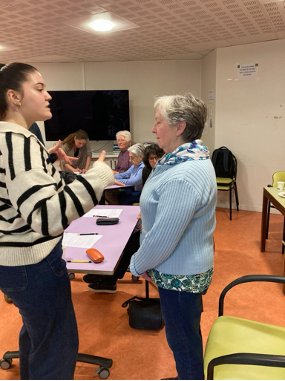
The core of the program consists of 2-hour group workshops, held in small groups of 6 to 12 participants, primarily aimed at people over 60 living in Homecare, particularly those who have never fallen or have fallen for the first time. The venues can vary: CCAS offices, town halls, independent living facilities, community centers, elderly people organizations elderly people sport centers.
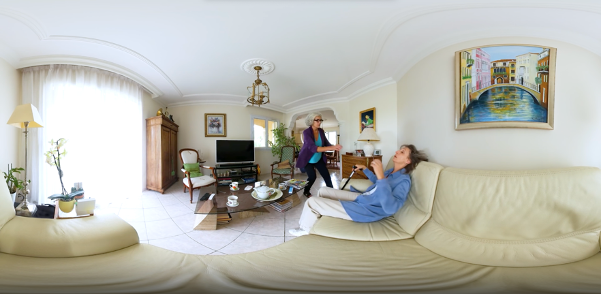
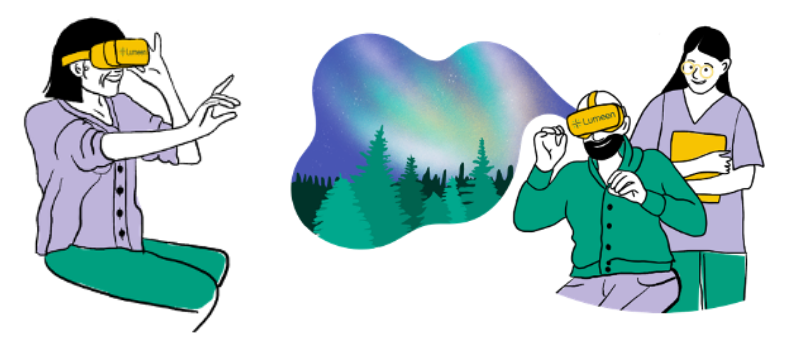
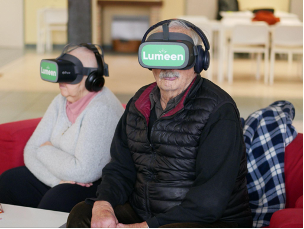
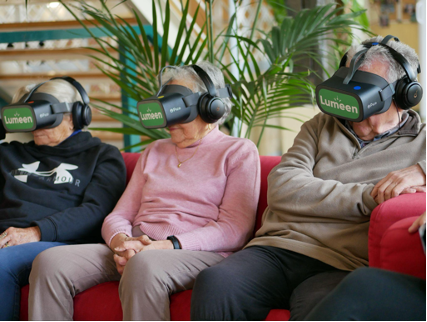
During the workshop, participants experience several immersive 360° video scenarios designed to cover the main risk factors for falls, Homecare in Homecare outdoors. These videos are played through our virtual reality Headsets , virtual reality via a tablet, allowing the professional leading the workshop (occupational therapist psychomotor therapist) to interact with the entire group and guide the experience in real time. The immersive experience is designed to encourage engagement: it facilitates the delivery of advice and helps participants visualize how these concepts apply to their own daily lives.
A Comprehensive Prevention Workshop
Each workshop follows a specific format: an introduction to the role ofoccupational therapist psychomotor therapistoccupational therapist or psychomotor therapist); an introduction to virtual reality a first-hand experience using theGetawaymodule; practice with fall prevention scenarios; a group discussion; the sharing of personalized advice; an individual “fall risk profile” assessment using the Tinetti score; and the distribution of an educational handout. A satisfaction survey and a social gathering round out the program.
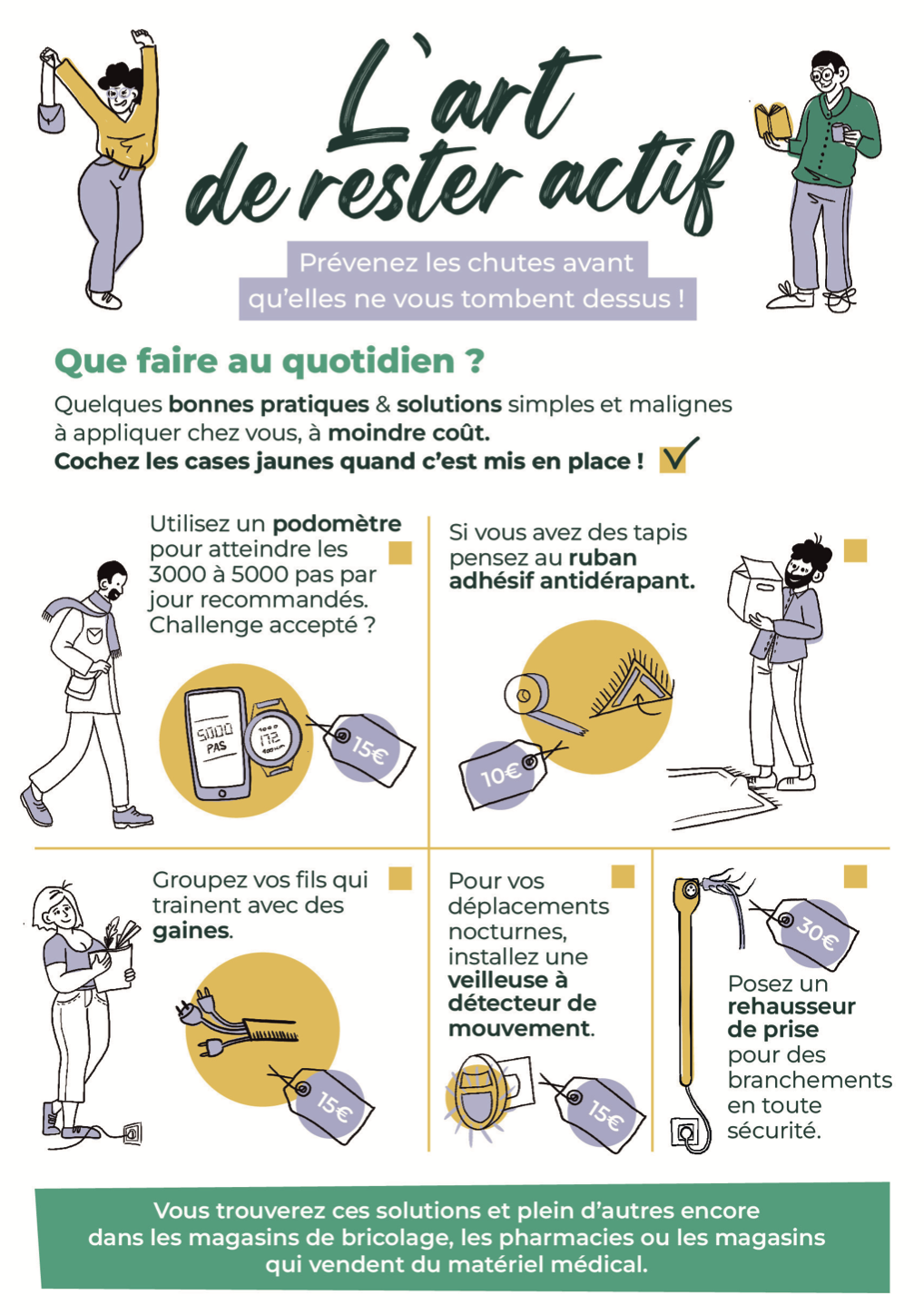
The “educational handout” flyer distributed to participants plays a key role: this tool helps reinforce the knowledge gained during the workshop, extends the messages to Homecare transforms the experience into a concrete action plan. It includes both practical reminders about good daily habits and a more lighthearted quiz-style section.
We are thus moving away from an experiential approach and toward a genuine health education program.
Positive, practical, and action-oriented prevention
The program addresses several determinants of health.
It helps participants think about how to organize their Homecare ensure the safety of their living environment, encourages regular physical activity and preventive behaviors, promotes tools such as telecare, and also addresses more psychosocial aspects such as self-esteem, confidence in one’s ability to act, and social connections.
The goal is not just to inform, but to encourage everyone to identify what they can change in their habits or their environment. *The Art of Staying Active* aims to talk about falls in a different way. With a more positive, practical, and participatory approach, prevention becomes less top-down and more engaging.
Wedon't just tell seniors what to do— we help them understand, plan for the future, discuss their options, and decide what they want to put in place.
The group format plays a key role by fostering peer support: participants share their experiences, tips, and insights, creating a dynamic of mutual aid and support among peers that reinforces the participants’ internalization of the messages.
That is undoubtedly where the key lies: inspiring people to take action, rather than simply reminding them of the risk.
A Pioneering Region: The Seine-et-Marne Department
The “Art of Staying Active” program was launched at the initiative of the Seine-et-Marne Department’s Commission of Funders for the Prevention of Loss of Independence, which provided full funding for the project. Occupational therapists from the Merci Julie network were then contacted and fully involved in the design and implementation of the project.
In 2025, 18 workshops were held in 10 municipalities in Seine-et-Marne, with a clear objective: to improve the quality of life for elderly people Homecare reducing their risk of falls. These workshops brought together 157 care recipients, with an average of 9 participants per workshop. The participants closely matched the target audience, consisting of seniors aged 60 to 97, with an average age of 79. A significant proportion of them had never fallen, confirming the program’s value in primary prevention.
The project also demonstrated its ability to reach vulnerable populations: people over the age of 85, people living alone, people who use mobility aids, and people with mild cognitive impairment. Tinetti scores were calculated to identify at-risk individuals more precisely.
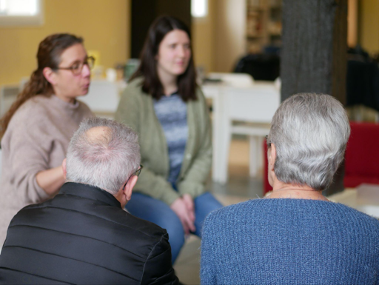
In terms of satisfaction, the results are particularly strong: more than 98% of participants recommend this workshop. Feedback from participants confirms the value of a more practical, positive, and collaborative approach to prevention:“Very useful—positive prevention,” “Great—it gave me some ideas,” “You always learn more when you’re with others,” or “The workshop made me realize that I can take action myself to prevent falls.” Several participants also highlighted the workshop’s reassuring impact: “I feel more reassured; I’m more careful now,” or “I feel safer and more confident about the future.”
The post-workshop follow-up also yielded interesting insights. Occupational therapists made follow-up phone calls to assess the program’s long-term impact, and Homecare assessments Homecare offered or initiated for certain individuals identified as priorities. The program, therefore, does not end on the day of the workshop: it is designed to provide guidance, support, and ensure the long-term adoption of best practices.
Testimonial from Eric Pettaros, Program Officer for the Commission of Funders for the Prevention of Loss of Independence at the Seine-et-Marne Departmental Council (77):
“In 2023, we developed a new, innovative tool to expand our efforts in the field of fall prevention following a collaboration with Gérond’if (the Île-de-France Gerontology Center), which created its Mobile Living Lab (inspired by the one in The Hague) to present and scientifically evaluate gerontechnologies through impact assessments in a “natural” environment .” The messages currently disseminated during fall prevention campaigns fall prevention elderly people are primarily conveyed during Homecare visits Homecare informal encounters in public spaces or “non-places.” The observation is that the care recipients are not very receptive and do not feel directly affected by this issue. One hypothesis to explain this finding is that the media used—such as flyers or model apartments—lack appeal and may even appear “stigmatizing” to this population. Consequently, public authorities are seeking innovative tools that create an impact and optimize the dissemination of messages. Indeed, it seems essential to move beyond the avoidance-oriented discourse all too often heard in the field. That is why engaging seniors by involving them in new approaches should help better involve them in this intellectual and behavioral journey. Preventing high-risk situations is a top priority, as is equipping teams working directly with care recipients innovative tools that enable them to raise awareness and encourage action.“We contacted Lumeen and asked them if they could collaborate with occupational therapists to co-develop an innovative fall prevention system fall prevention elderly people.” Eric Pettaros
A project that has been implemented in several regions since 2024
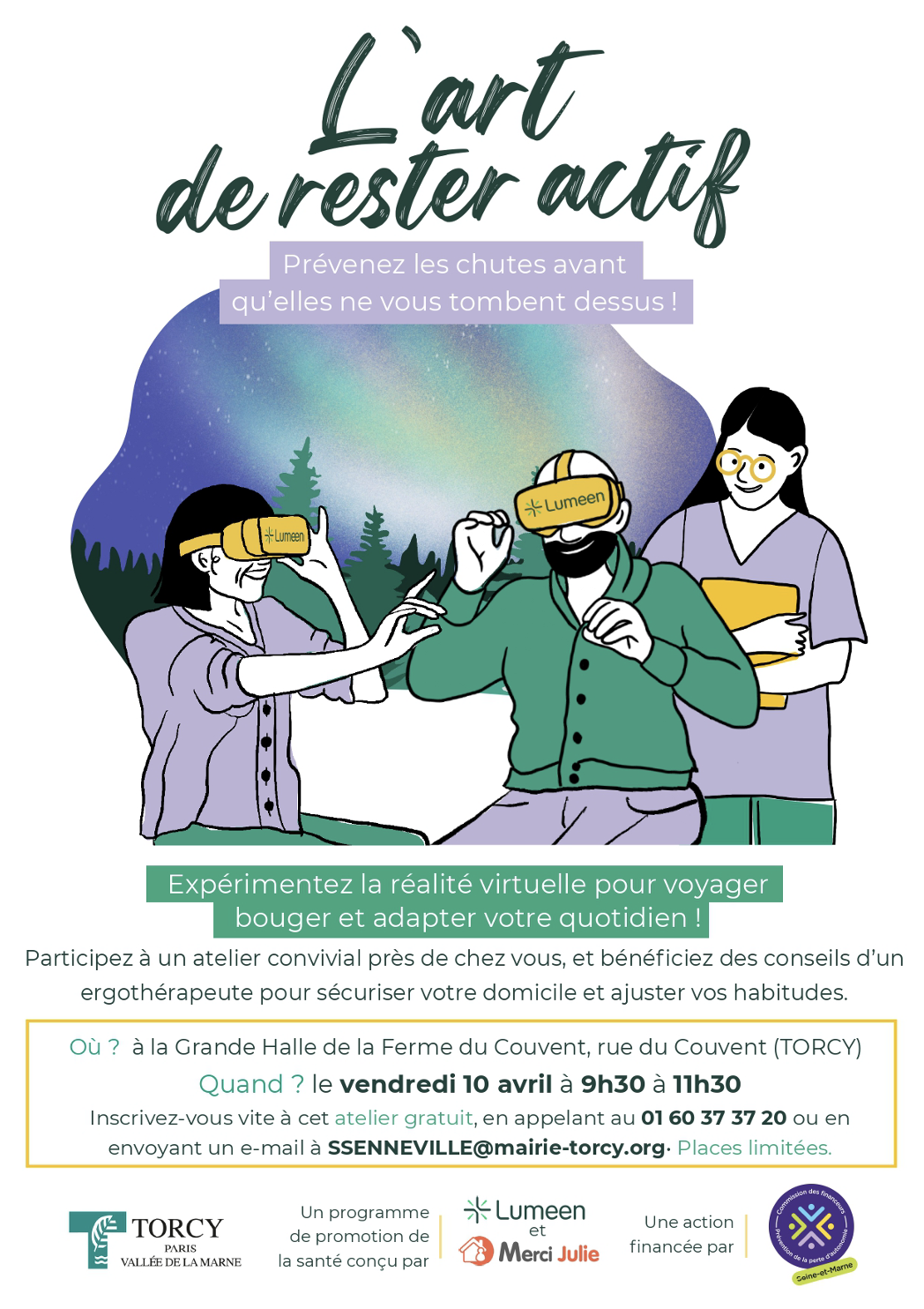
"The Art of Staying Active" is set to expand nationwide. The program is now being rolled out in several departments, including Manche, Calvados, Landes, Seine-et-Marne, Bouches-du-Rhône, Charente, Charente-Maritime, Corrèze, Creuse, Deux-Sèvres, Vienne, and Haute-Vienne.
This momentum confirms the value of the model: a flexible, replicable program that relies on local partners and qualified professionals to tailor its approach to the specific context on the ground. In some regions, the program is also implemented in collaboration with specialized organizations focused on prevention and community engagement, such as Resanté-Vous, with the aim of ensuring complementarity and reaching target audiences as directly as possible.
An ecosystem of committed stakeholders
“The Art of Staying Active” is a program that could not exist without strong collective support, both on the ground and in terms of funding. Its implementation currently relies largely on public and quasi-public funding dedicated to preventing the loss of independence. This support is essential for making these initiatives available to seniors free of charge and for rolling them out as close as possible to local communities.
Alongside these funders, a network of frontline professionals helps bring the program to life. Occupational therapists—such as those from the Merci Julie network or Resanté-vous—play a central role in leading workshops, providing follow- care recipients for care recipients embedding prevention messages into daily life.
Local governments, CCAS offices, independent living facilities, and partner organizations, for their part, help identify target groups, organize workshops, and create the conditions for community-based support.
Finally, Lumeen provides the technological foundation, immersive content, and methodology to support this ecosystem.
It is this synergy between funders, field experts, and local stakeholders that makes it possible today to turn an innovation into concrete, useful action that can be implemented on a large scale across regions.
To go further:
To learn more about Merci Julie, click here
To learn more about Resanté, click here
To learn more about the Seine-et-Marne Department, click here
Press contact: communication@lumeen.com
Want to test Lumeen for 30 days with no commitment? ?


.jpg)