
virtual reality the Management of pain A Theoretical and Clinical Exploration

The applications of virtual reality are virtual reality limited to Games and the entertainment industry. In recent years, the use of virtual reality expanded significantly in the medical field, particularly as a promising tool for managing pain anxiety.
In this article, we will explain in simple terms how virtual reality alter the perception of pain. We will then present the most representative clinical studies as well as concrete practical applications. You will learn why and how this technology positively impacts the lives of thousands of patients around the world.
virtual reality a powerful distraction pain
To understand how pain is modulated, we will draw on the “gate control theory,” proposed by Ronald Melzack and Patrick D. Wall in 1965 [1], [2]. This theory suggests that there is a “system of gates” in the spinal cord that determines whether pain signals pain significant enough to be transmitted to the brain. Several factors can influence the opening and closing of these gates:
- Signal strength: A stronger signal is more likely to pass through the doors.
- Emotional state: Stress,anxiety fear can trigger and intensify pain.
- Medications: Certain medications, such as pain relievers, work by shutting down or blocking pain signals pain the thalamus (a region of the brain involved in processing pain signals).
- Distractions: When a sensory stimulus (tactile, auditory, visual, etc.) captures our attention, it competes with the pain stimulus. These sensory stimuli reach the brain more quickly, which affects how the pain signal is processed. In other words, the new stimulus “partially closes the door” on the pain signal, thereby reducing our perception of it.
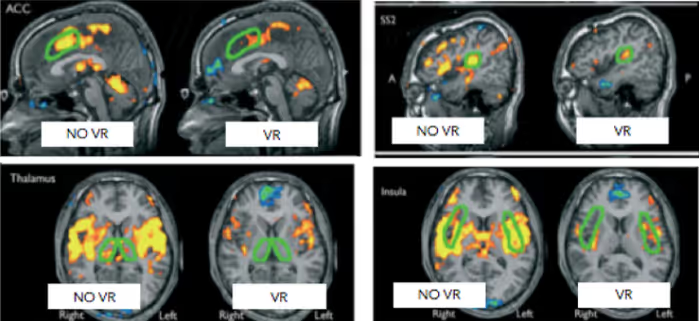
In recent years, the use of virtual reality more widespread in the healthcare sector, as Headsets proven to be particularly effective tools for distracting patients from pain. In fact, a neuroimaging study has shown a reduction in brain activity in the regions involved in pain perception pain virtual reality sessions virtual reality Figure 1) [3].
Why virtual reality so effective at distracting patients from pain ? Headsets have significant pain-relieving potential because they offer rich and captivating experiences that heavily engage patients’ attention. The most effective experiences, such as those offered by Lumeen, incorporate several concepts to optimize their distraction potential distraction
- Multimodal sensory stimulation: Headsets visual and auditory stimuli.
- Sense of presence: allows the user to feel immersed in the virtual environment, as if they were actually there. This creates a more realistic and engaging experience.
- Captivating narratives: An engaging, immersive scenario can transport the patient away from their reality and draw them into the story.
- Interactive Activities: Incorporating interactions and challenges into the VR experience encourages patients to actively engage and focus their attention. This may include Games, interactions with virtual characters, or dynamic environments.
- Medical hypnosis, cardiac coherence, and music therapy: combining hypnotic verbal guidance, cardiac coherence exercises, and soothing music can help reduceanxiety pain.
Our Cayceo treatments combine all of these concepts and can even trigger stimuli to further divert attention at that critical moment—when you’re about to give an injection, perform a puncture, or make an incision… Click here to learn more.
The gate theory, simplified in this article, helps us understand that pain merely a passive sensation, but a complex process influenced by physical and psychological factors. It is important to note that this theory was developed in 1965 and has since been the subject of extensive research. More recent theories of pain into account more complex mechanisms, but the fundamental idea of “gates” remains a useful tool for understanding the modulation of pain see the “Further Reading” section).
virtual reality a Tool for pain Management pain Medical Care: Evidence and Clinical Applications
What does the research say?
Among the applications of virtual reality healthcare, distraction reduce pain hospital care has been the most extensively studied over the past two decades. In 2000, Hoffman and his team, pioneers in this field, set out to explore the analgesic potential of virtual reality 4]. To do so, they invited 12 burn patients (with an average of 21% of their body surface area affected) to participate in motor rehabilitation sessions with and without virtual reality. The virtual reality experience virtual reality in this study took the form of an interactive game called “Snow World,” which immersed patients in a computer-generated snowy environment. The results indicated a significant reduction in pain intensity pain the virtual reality condition compared to the condition without virtual reality. Other preliminary studies have demonstrated the effectiveness of virtual reality reducing pain patients undergoing medical procedures such as wound care and physical therapy. These studies notably revealed that patients experienced a pain reduction in pain during virtual reality sessions virtual reality standard treatments without virtual reality 5].
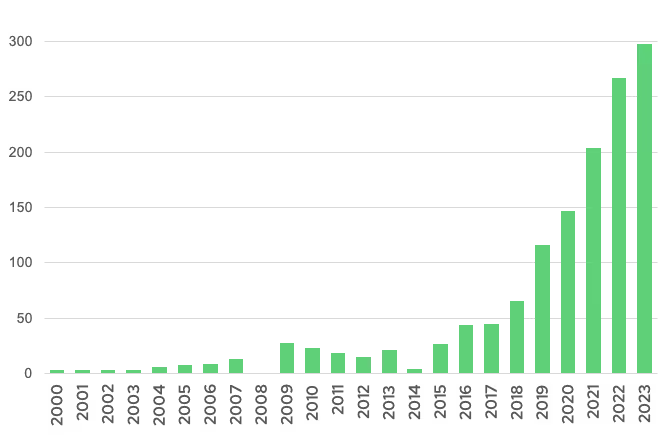
This initial study by Hoffman and his colleagues contributed to a significant increase in research on virtual reality the healthcare field, particularly over the past five years (Figure 2).
Since then, numerous studies have examined the benefits of virtual reality a complementary, non-pharmacological intervention pain non-pharmacological intervention . The technology has been shown to effectively reduce medication use across many care pathways, with reductions in opioid use reaching up to 40% [6].
In children and adolescents, virtual reality been evaluated for pain management pain several settings: Dental care, burn care, Oncology, and injections (vaccinations, blood draws, etc.). A systematic review and meta-analysis concluded that virtual reality as distraction medical procedures in Pediatrics , effectively Pediatrics pain [7]. In adults, virtual reality also widely used to relieve pain experienced during medical procedures or during and after surgery. Used alone or in combination with analgesics, virtual reality has proven particularly effective in the treatment of wounds and burns, as well as during needle and catheter insertions [8].
virtual reality also help manage pain . A literature review found that this technology could serve as an alternative to painkillers in the management of back pain [9]. Another study involving 80 women with breast cancer showed that an virtual reality session (used in conjunction with morphine) significantly reduced pain cancer-related pain compared to morphine alone [10].
virtual reality pain Applications in the Medical Field
In the medical field, virtual reality currently used as a therapeutic tool for pain management pain a variety of settings:
- Relief from pain ,
- Treatment of postoperative pain,
- Distraction painful medical procedures, such as:
- Changing dressings for burns or wounds
- Venipunctures and intravenous injections,
- Dental care,
- Childbirth and other gynecological procedures,
- Certain surgical procedures e.g., implantable port placement, biopsy, bronchoscopy, etc.).
- During physical therapy sessions, by helping patients focus on specific movements while minimizing their perception of pain.
It should be noted that there are also other applications of virtual reality the medical field, such as: treating phobias, Training caregivers, raising awareness, providing therapeutic education, and reducinganxiety .
The key takeaway
virtual reality as an innovative and promising therapeutic tool in the fight against pain
- By offering an effective and beneficial non-drug alternative for patients,
- By influencing the mechanisms of pain perception, it helps reduce the intensity of pain , improve patient comfort, and decrease their reliance on pain relievers,
- By offering a scope of application that covers a wide variety of painful conditions,
- By opening up new possibilities in patient care through an immersive, personalized, and engaging therapeutic approach.
To learn more about our virtual reality solutions for pain management, visit our dedicated page.
Further Reading
Neurobiology of pain
The gatekeeper theory:
The Different Theories of pain
References
[1] R. Melzack and P. D. Wall, “Pain Mechanisms: A New Theory: A gate control system modulates sensory input from the skin before it evokes pain perception and response,” Science, vol. 150,no. 3699, pp. 971–979, Nov. 1965, doi: 10.1126/science.150.3699.971.
[2] M. Moayedi and K. D. Davis, “Theories of pain: from specificity to gate control,” J. Neurophysiol., vol. 109,no. 1, pp. 5–12, Jan. 2013, doi: 10.1152/jn.00457.2012.
[3] H. G. Hoffman et al., “Modulation of thermal pain-related brain activity with virtual reality: evidence from fMRI,” NeuroReport, vol. 15,no. 8, pp. 1245–1248, June 2004, doi: 10.1097/01.wnr.0000127826.73576.91.
[4] H. G. Hoffman, D. R. Patterson, and G. J. Carrougher, “Use of Virtual Reality for Adjunctive Treatment of Adult Burn Pain During Physical Therapy: A Controlled Study,” Clin. J. Pain, vol. 16,no. 3, pp. 244–250, Sept. 2000, doi: 10.1097/00002508-200009000-00010.
[5] H. G. Hoffman et al., “Virtual Reality as an Adjunctive Non-pharmacologic Analgesic for Acute Burn Pain During Medical Procedures,” Ann. Behav. Med., vol. 41,no. 2, pp. 183–191, Apr. 2011, doi: 10.1007/s12160-010-9248-7.
[6] T. McSherry, M. Atterbury, S. Gartner, E. Helmold, D. M. Searles, and C. Schulman, “Randomized, Crossover Study of Immersive Virtual Reality to Decrease Opioid Use During Painful Wound Care Procedures in Adults,” J. Burn Care Res., p. 1, May 2017, doi: 10.1097/BCR.0000000000000589.
[7] R. Eijlers et al., “Meta-analysis: Systematic Review and Meta-analysis of Virtual Reality in Pediatrics: Effects on Pain and Anxiety,” Anesth. Analg., vol. 129,no. 5, p. 1344, 2019, doi: 10.1213/ANE.0000000000004165.
[8] Q. Huang, J. Lin, R. Han, C. Peng, and A. Huang, “Using Virtual Reality Exposure Therapy in Pain Management: A Systematic Review and Meta-Analysis of Randomized Controlled Trials,” Value Health, vol. 25,no. 2, pp. 288–301, Feb. 2022, doi: 10.1016/j.jval.2021.04.1285.
[9] C. Tack, “Virtual Reality and Chronic Low Back Pain,” Disabil. Rehabil. Assist. Technol., vol. 16,no. 6, pp. 637–645, August 2021, doi: 10.1080/17483107.2019.1688399.
[10] E. Bani Mohammad and M. Ahmad, “Virtual reality as a distraction for pain and anxiety among patients with breast cancer: A randomized controlled trial,” Palliat. Support. Care, vol. 17,no. 1, pp. 29–34, Feb. 2019, doi: 10.1017/S1478951518000639.
Photo credit: Coline Bachelier
Want to test Lumeen for 30 days with no commitment? ?


.jpg)