
Rebuilding social connections in care homes the COVID-19 pandemic: psychologist Blanquart did just that.
.avif)
During the coronavirus crisis, there was a lot of talk about the vulnerability and fragility of care homes residents. But what were they really going through? Camille Blanquart, psychologist working in a care facility, reached out to residents by participating in a study on their experiences amid health restrictions. “I was deeply moved by their isolation. What they lamented most was this lack of social connection.” In the midst of a fifth wave of COVID-19, what can we do to improve the quality of life for our seniors? Find out how this psychologist working with seniors, managed to alleviate her residents’anxiety depression and reignite social connections within her facility.
Non-pharmacological therapies tailored to each resident.
elderly people care homes often care homes neurodegenerative diseases, cognitive disorders associated behavioral problems. In addition, since the first lockdown, healthcare professionals have observed a decline in the well-being of older adults, including memory deterioration and a decrease in cognitive and motor stimulation.
As psychologist atcare homes Parc de Mouginscare homes and fully aware of all the challenges faced by our seniors in care facilities, Camille Blanquart works every day to promote their well-being. After volunteering with elderly people and spending more than three years leading activities in care homes shifted her focus to the senior population by earning a master’s degree in integrative psychology of aging. In her view, to best alleviate symptoms and improve residents’ quality of life, the care, activities, and therapeutic workshops offered to them in care facilities must be personalized and take into account each person’s life story.
To this end,care homes Parc de Mouginscare homes offers several non-pharmacological therapies (NPTs) to its residents. “At our facility, we don’t just aim to meet their basic needs; we’re here to offer them something more—to ensure they’re happy. That’s why we’re committed to implementing NMTs throughout the facility.” Support Director Loïc Boucraut is the driving force behind this initiative to roll out these new therapies.
The wider the range of non-pharmacological therapies available, the easier it is to best meet the needs of each resident. When making her selection, Camille Blanquart, in collaboration with doctor Christian Schnepf andoccupational therapist Nerrière, always draws on the resident’s life story, interests, passions, and remaining abilities to determine which therapy is best suited for them. She also takes into account scientific studies and therapeutic guidelines to best address each condition, with the goal of reducing medication use and improving the resident’s mental well-being.
Promoting well-being and social connections and reducing depression through virtual reality.
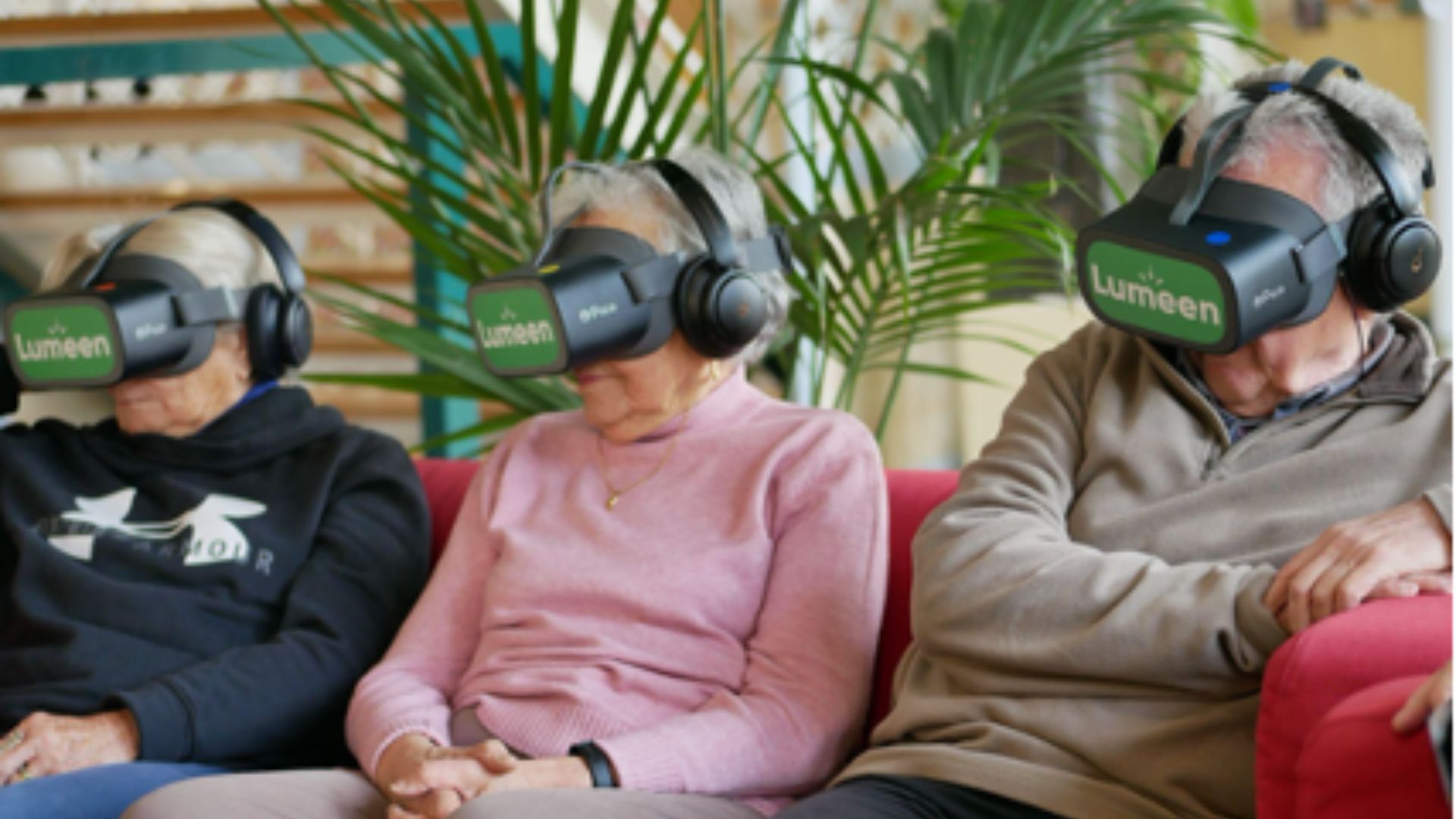
Since August, a new non-pharmacological therapy has been introduced atcare homes virtual reality workshops. Several of the approximately 100 residents have already participated. Camille Blanquart focuses on various conditions that can be treated using this new technology. In groups of three, residents with similar conditions participate in two workshops per week.
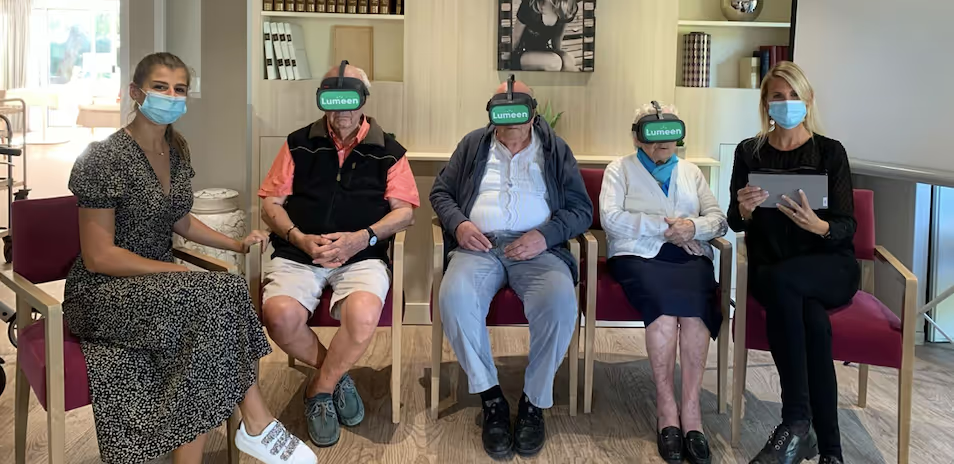
An initial protocol conducted with three residents suffering from depression. The results are promising: the virtual reality sessions virtual reality positive emotions in all three residents. Their comments revealed a sense of well-being: “My feet are in the water,” “There are all these colors—it’s wonderful.” These workshops also allowed the residents to build social connections and recall positive memories: “That session was nice; it brought back memories of snow from when I lived in Piedmont,” “That was my honeymoon in 1964. I’ve been to Venice about ten times. My wife and I also used to go to the thermal spas near Padua.” virtual reality thus virtual reality a powerful tool for reminiscence .
A quantitative assessment was also conducted using the GDS-15, a screening test for depression risk, before the first session, at the end of the fourth session, and at the end of the eight scheduled sessions. For one resident, the GDS-15 results showed a significant decrease in depression risk. Her score went from severe depression to moderate depression (resident’s score: 11-8-6). “I observed some very interesting feedback and a great deal of well-being and positive emotions among the residents,” confirms the psychologist . “They were able to truly build social connections. It allowed them to get to know each other better.” The technology provides a common topic of conversation for residents, who sometimes have difficulty socializing. It encourages them to speak up and share anecdotes from their life stories.
Among the programs available to Camille Blanquart, the Getaway module Getaway the solution proved to be the most promising. It allows residents to enjoy extraordinary experiences in France and abroad: lavender fields in Provence, cherry blossoms in Japan, swimming with dolphins, the Northern Lights in Alaska… In addition to the immersive experience provided by the Headsets, educational content is also offered. Annotations allow caregivers to point out points of interest to participants (“look at the statue on your right”).“This tool helps stimulate motor functions, since residents can move their heads left, right, and up—so it’s great!” says Camille Blanquart. A review quiz at the end of each experience also encourages discussion. “The questions in this module help residents talk to one another and stimulate their autobiographical memory,” she confirms . “Even I have learned a lot about the residents thanks to the virtual reality sessions virtual reality The tool has become a real vehicle for interaction—not only among residents but also with healthcare professionals.”
Other studies to test the effectiveness of virtual reality underway atcare homes de Mouginscare homes , particularly with residents sufferinganxiety aphasia. In the near future, the team also plans to use virtual reality distract residents during painful procedures. “In collaboration with someone writing a thesis on this topic, I’d also like to use it for people with other conditions,” says the psychologist.
Residents' quick adoption of the technology.
virtual reality care homes A surprising paradox—but one that everyone agrees on! The psychologist it’s essential to start with psychoeducation about the virtual reality headset. “It’s important to raise residents’ awareness, reassure them, and show them that they can take off the headset at any time if they wish. “I try to make sure they’re truly active participants in this session,” confirms Camille Blanquart. “I ask them to choose the landscape they like, the place they want to explore.”
Once residents understand and accept the technology, they keep asking for more! “I was pleasantly surprised to see how quickly and easily residents embraced this new technology. I think it’s great to be able to integrate new technologies into care homes.” Especially since the tool was designed to make this technology easily accessible to healthcare professionals. All the equipment is included in a ready-to-use case. A tablet allows the caregiver to control what’s being played through the Headsets. Seniors don’t have to do anything—they just enjoy the experience.
Reassure residents… and caregivers
Healthcare teams face high levels of stress on a daily basis. They were on the front lines during the pandemic. They may have to deal with residents who are difficult to care for. Camille Blanquart believes that if she provides these teams with a space to relax, they will be better able to care for their patients. “I was able to try out a session with a nursing student and a nursing assistant,” she tells us. “They told me that the session had really calmed them down. I’m very happy to be able to offer them this space for relaxation.”
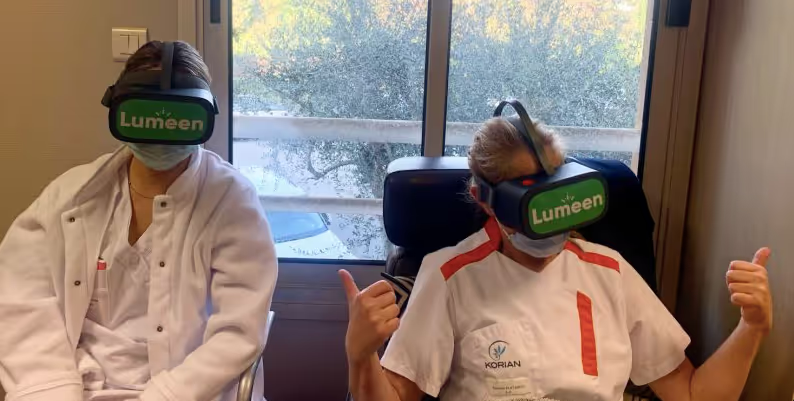
The solution escaping beyond the school grounds.
care homes residents care homes suffered greatly from the lockdown and the pandemic. Many have complained about no longer being able to go out (visits cut short or canceled, no more outdoor outings, reduced group activities, etc.). Beyond their therapeutic benefits, virtual reality workshops simply allow residents to take their minds off things and escape a little from within the walls of their facility. “It brings me great joy to offer them the chance to travel a little, despite the health restrictions,” concludes Camille Blanquart.
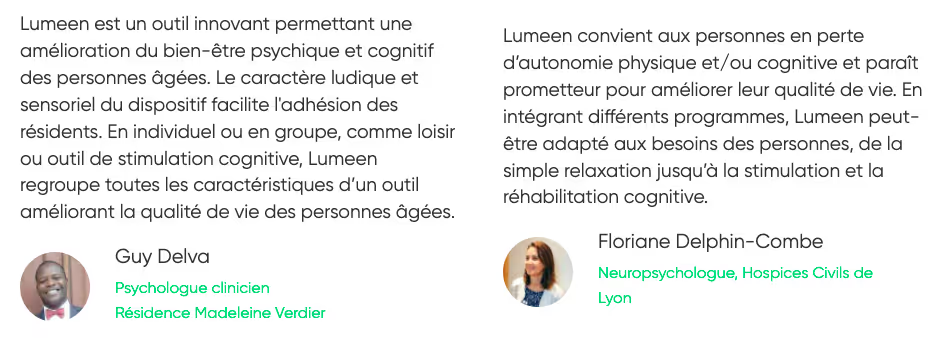
They confirm it.
The media are covering it.
Want to test Lumeen for 30 days with no commitment? ?


.jpg)