
La Poste Group uses Lumeen to combat social isolation in Homecare
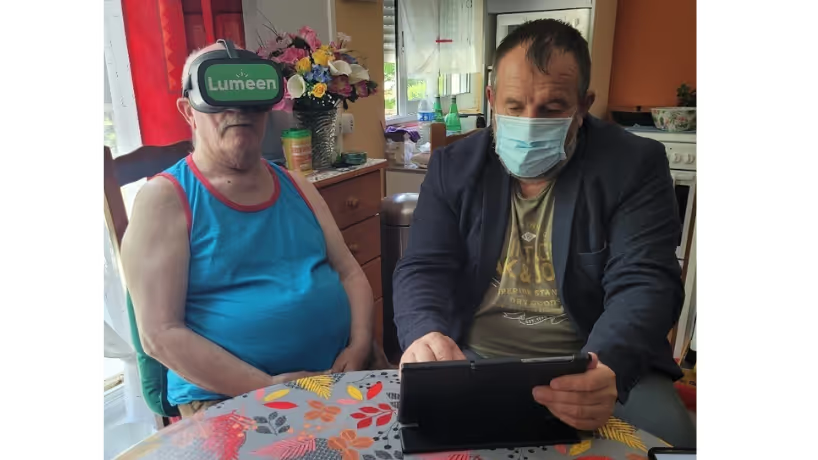
In May 2022, La Poste Group launched a pilot program lasting several months to test the Lumeen device with elderly people Homecare. This collaboration was built on shared values and goals: improving the daily lives and health of elderly people, combating isolation, strengthening social ties, and placing people at the heart of the services provided.
Since its founding, Lumeen has made it its mission to make the social and therapeutic benefits of virtual reality accessible to as many people as possible virtual reality is actively involved in ongoing experimental and research projects.
For its part, La Poste Group is a leading provider of Homecare support and services Homecare seniors, backed by many years of commitment to the fields of health and independent living.
We are proud that this new partner has placed its trust in us to test the use of virtual reality social connections. We are all the more proud given the numerous, positive, and heartfelt responses we’ve received, as well as the undeniable benefits experienced by care recipients, which are already evident after just the first few weeks of use!
A new immersive tool rolled out in several pilot regions
Since July 2022, a series of pilot programs have been launched. Each program lasts about one month and initially targets regions where La Poste Group support programs were already in place.
The main responsibilities of La Poste support workers are to maintain regular contact with senior care recipients, assist them in meeting their daily needs as effectively as possible, and help connect them with the appropriate local resources (financial assistance, home modifications, personal care services, etc.).
To a large extent, new technologies are at the heart of the support initiatives being implemented, including the use of tablets, Games memory Games , home automation systems, and telecare devices with fall detectors… and, more recently, the virtual reality headset.
How?
Caregivers are thus equipped with a virtual reality headset, which they can use to offer care recipients immersive and innovative experiences during their Homecare visits.
Each “session” then unfolds in several stages: the facilitator presents the device and the three available modules (Escape, Relaxation reminiscence); once the module has been selected, helping the participant get settled (in a comfortable and safe position, adjusting the sound environment) and assisting them with putting on the headset (to ensure it is positioned correctly, the volume is set appropriately, etc.), followed by the start and progression of the experience, guided by the facilitator.
There is always an opportunity for discussion at the end of the experience to reflect on participants’ feelings, sensations, and level of satisfaction.
Visits by accompanying guests generally last between 1 hour and 1 hour and 30 minutes, during which several videos may be shown.

Where?
The first phase of the pilot program took place in the Eure department in July 2022, involving a team of three care providers. Since September 2022, the virtual reality headset has been in Marseille, where it is being used as part of the ViagéVie program—a supported life annuity initiative run in partnership with the Banque des Territoires PACA and SOLIHA Provence. The headset’s tour will then conclude with XL Autonomie in the Landes region in October 2022, where it will once again be used by a team of three caregivers as part of the departmental public service Vivre à Homecare. Overall, nearly 40 seniors out of the 500 receiving care are expected to benefit from this pilot program.
In the Eure Department: VR as a New Prevention Tool at Homecare
Let’s return for a moment to the Eure department, where—as we mentioned—the first pilot program was launched in July 2022. In this region, the use of virtual reality Headsets has been integrated directly into the MAINTIEN A DOM package, developed jointly by the Eure Department and La Poste, which offers support services fully funded for elderly people .
Based on the feedback received, the Headsets found to be easily portable and quick and intuitive to use. But beyond even these technical advantages, it was the versatility of use and the observed benefits that were unanimously praised by the respondents.
Sessions tailored to the preferences and needs of care recipients
Although the target audience consisted primarily of elderly people —whether due to family circumstances, geographical isolation, limited mobility, or a lack of social contact—the range of activities offered during the social visits conducted by La Poste’s volunteers remained broad.
For some, it was a chance to revisit their memories and their past lives. Thierry, a companion on the trip, speaks emotionally about the “sense of wonder” felt by one participant who wanted to rediscover his hometown—a place he hadn’t seen since he was fourteen. “He had tears in his eyes; it lasted a long time, and I think he thanked me more than fifty times,” he adds with a laugh. For others, the focus was on the journey itself—discovering new places and experiencing an sensation of escape and well-being. “It feels like another world,” Huguette tells us, having tried out the Evasion module.
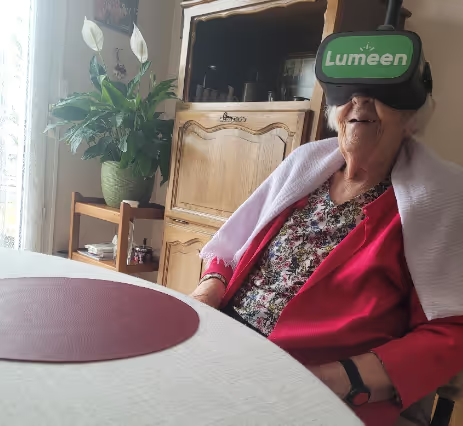
Social, therapeutic, and psychological benefits
Because the experience can be emotionally rich. In fact, it is often through this experience that it facilitates sharing and conversation, providing opportunities for meaningful exchanges not only between elderly people their companions, but also directly with their families, loved ones, and caregivers. For Francis and Céline, who spoke at length after their first session, new plans are already taking shape: “We’d like to visit Aubervilliers again; we lived there for 35 years.”
Because the experiences they have just had are intense and unique, communication with certain care recipients—and even the relationship of trust they have with their caregiver—may be strengthened as a result.
Using VR can also sometimes be an opportunity to calm down, relax, and take a break from pain and worries for a moment. For some, it even helps them get back to sleep: “After the session, I slept from 10:30 p.m. to 5:30 a.m., something that hadn’t happened to me in months,” says Mireille, 85, happily. Here, Thierry tells us how this person, who had been suffering from sleep problems, thanked him profusely after sleeping for 11 hours following her session. Or how this man, undergoing chemotherapy, stopped feeling the tingling in his fingers for the duration of his relaxation session. “The positive impacts on health and psychological well-being have exceeded our expectations,” explains Marie Bonin, Head of Gerontology Management and Engineering within the Health and Independence Division of La Poste Group. She adds that the program has also been tested “with people who have cognitive disorders, particularly Alzheimer’s,” yielding very positive results and initial indications of a reduction in behavioral disturbances.
A successful first test!
After a month of use in the Eure department, the results seem positive!
As for care recipients, many of them have expressed their desire—and even their eagerness—for a new session. While Huguette shared her excitement at the prospect of discovering new animal species, Francis has already been thinking about several places he’d like to revisit or explore for the first time.
Exciting prospects for collaboration
However, they’ll have to wait a few more months, since the Tour de France of experiments isn’t quite over yet!
The virtual reality headset is currently wrapping up its one-month trial in Marseille. There, the device is part of the range of services offered through the ViagéVie program.
It will then leave Provence for the Landes region to reach a new audience, supported by XL Autonomie (a company jointly owned by the Landes Department and La Poste). Throughout the month of October, the new team equipped with the headset will, in turn, be able to assess the tool’s usefulness with new care recipients, including people with disabilities.
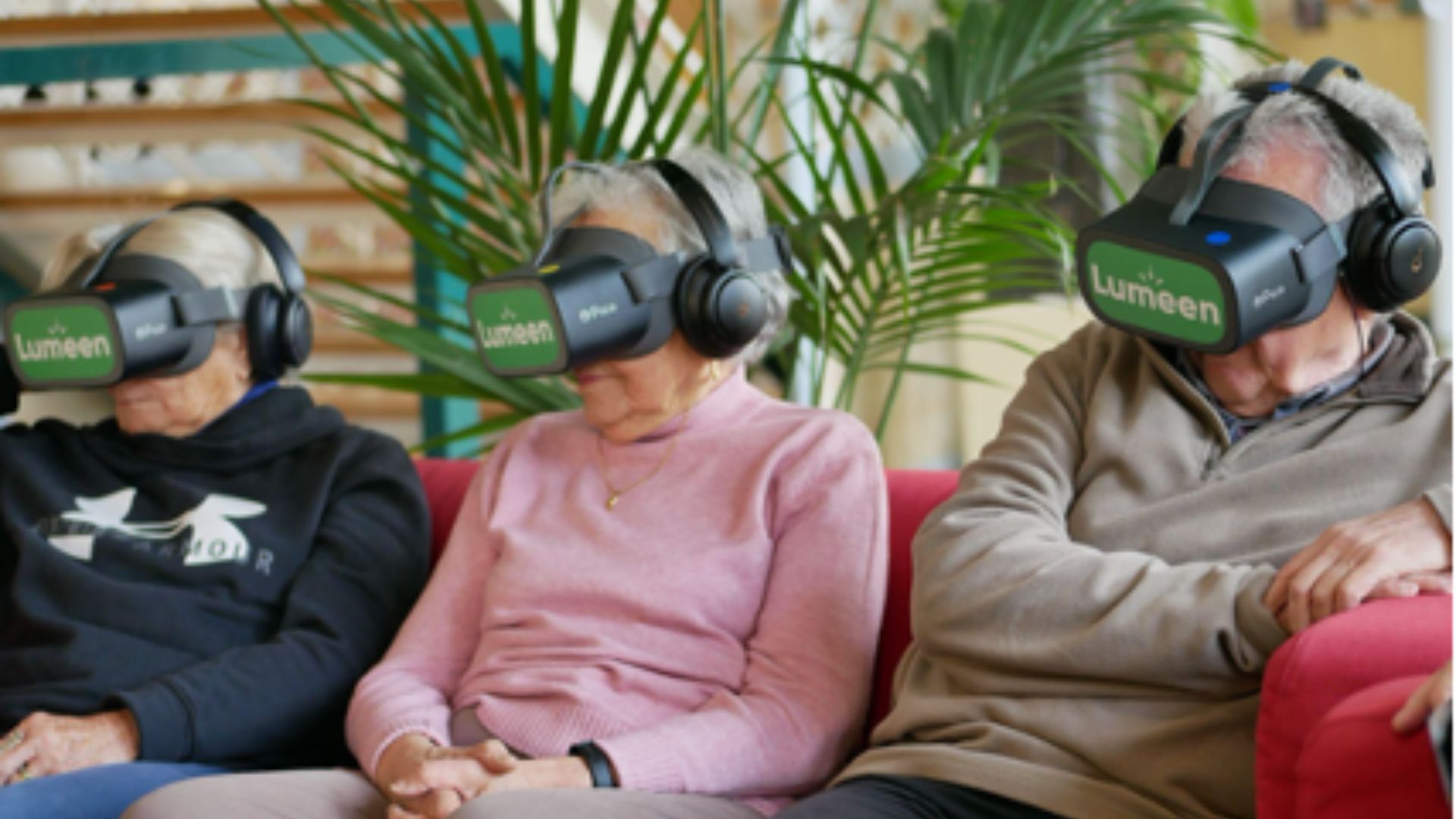
Beyond even these key milestones, the initial results have already paved the way for new avenues of thought and potential uses for the headset. Why not, for example, try to design group sessions that would bring together some of the care recipients region? The logistical and operational challenges are real, but so is the motivation of both the teams and the care recipients.
Lumeen is, of course, working closely with its partners to continue adapting and improving its tools and how they are used. We would like to thank La Poste Group—and especially Marie Bonin—as well as all the caregivers and care recipients for their commitment and trust in these pilot projects.
We hope that these initial successes will lay the foundation for a renewed partnership!
If you'd like to learn more about using Lumeen at Homecare you can also visit our dedicated page: Care and Support at Homecare
Want to test Lumeen for 30 days with no commitment? ?


.jpg)