
How can virtual reality be introduced virtual reality nursing homes?
Introducing virtual reality nursing homes—why not? Starting in 2030, the number of seniors requiring care will continue to rise. We must begin today to seek solutions to address this major societal challenge. The technological revolutions of recent years have provided us with powerful tools. Why not let elderly people benefit from them elderly people thereby improve their quality of life in care facilities? Helping our seniors embrace technology can sometimes be difficult, but introducing virtual reality care homes impossible. Lumeen has done it—here’s how we went about it.
The number of seniors in nursing homes is expected to rise starting in 2030
Starting in 2030, France will see an increase in the number of elderly people. The first generations of the postwar baby boom will be 85 years old—the average age for entering a nursing home. The figures are cause for concern: studies estimate that between 1.43 and 1.71 million elderly people dependent on care by 2030. However, once a resident is admitted to a facility, they are often forced to remain there. Maintaining social connections and combating isolation—or even depression—then becomes difficult. How can we address this public health challenge that affects us all? We must begin now to propose solutions to improve care for our seniors—both today and in the future.
elderly people Technology: An Insurmountable Digital Divide?
Demographic aging goes hand in hand with the technological revolution. The past 50 years have been marked by numerous advances in this field. However, it seems that older adults have largely been left behind in the transition to new technologies.
A 2018 CSA Research study shows that 27% of people over the age of 60 never use the Internet—that is, more than 4 million people in France. In addition, 43% of people aged 70 and older do not own a computer, and 18% do not have a cell phone.
Older generations are, in fact, sometimes very disconnected from this world, for several reasons. First of all, because they don’t understand it. elderly people been trained in these new technologies and are therefore less skilled with them. This often results in a sense of confusion and disinterest. The fear of the cold, impersonal nature of new technologies also often puts our elders off. Finally, many seniors have managed to get by without these technologies until now and therefore believe they are not necessary for their daily lives.
How can virtual reality be introduced virtual reality a nursing home for the first time?
Nevertheless, the terms “technology” and “seniors” are not necessarily contradictory; in fact, they could even be complementary. Indeed, why not take advantage of the positive aspects of these technologies and let our seniors benefit from them?
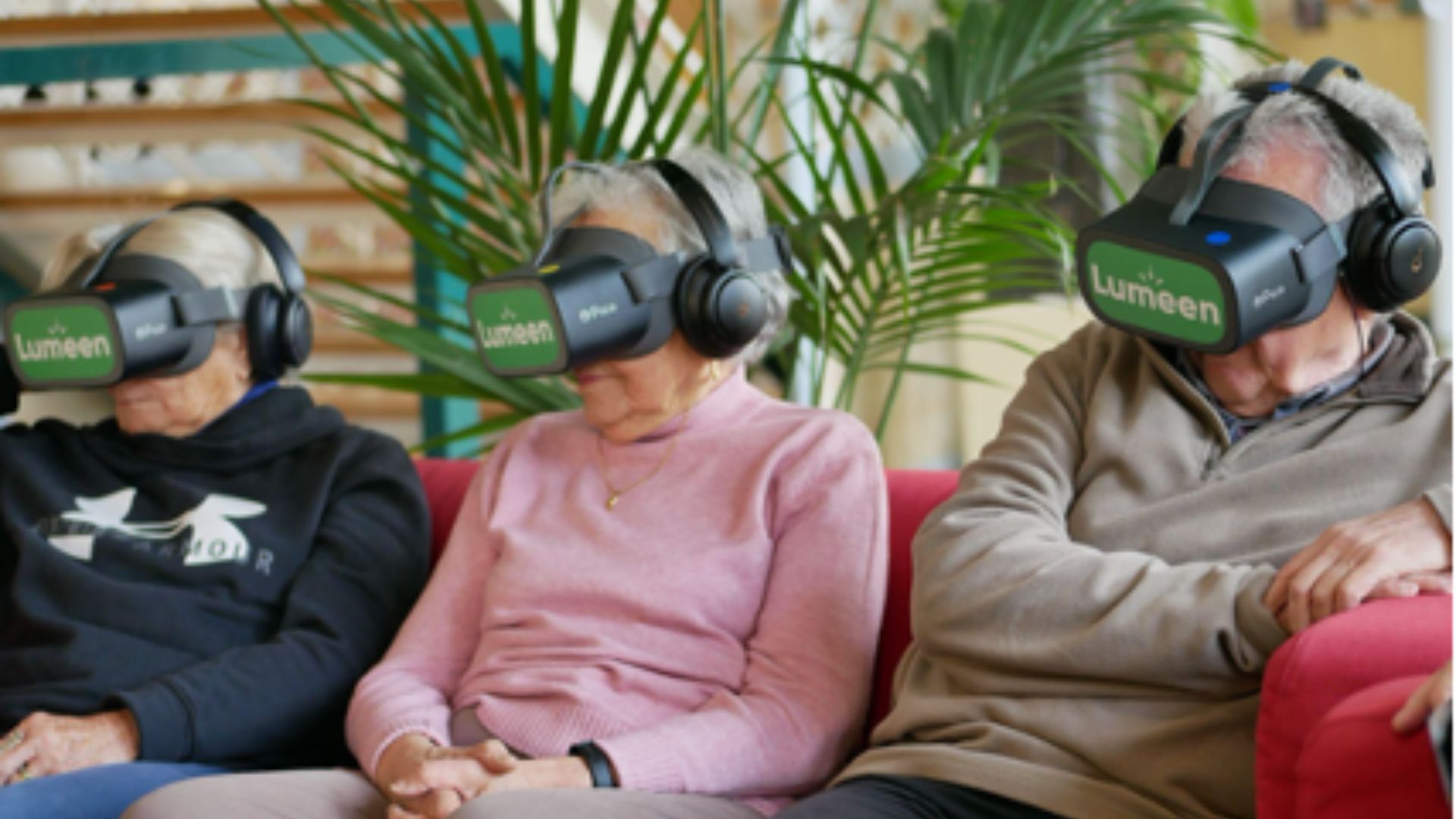
The virtual reality by Lumeen has one advantage over other technologies: its ease of use. This is especially true when used in nursing homes. In fact, there are no complicated steps for elderly people to follow. The facility’s activity coordinators remotely control the session and guide the seniors’ immersion using a tablet connected to the Headsets. All they have to do is select content from the library and stream it to the Headsets.
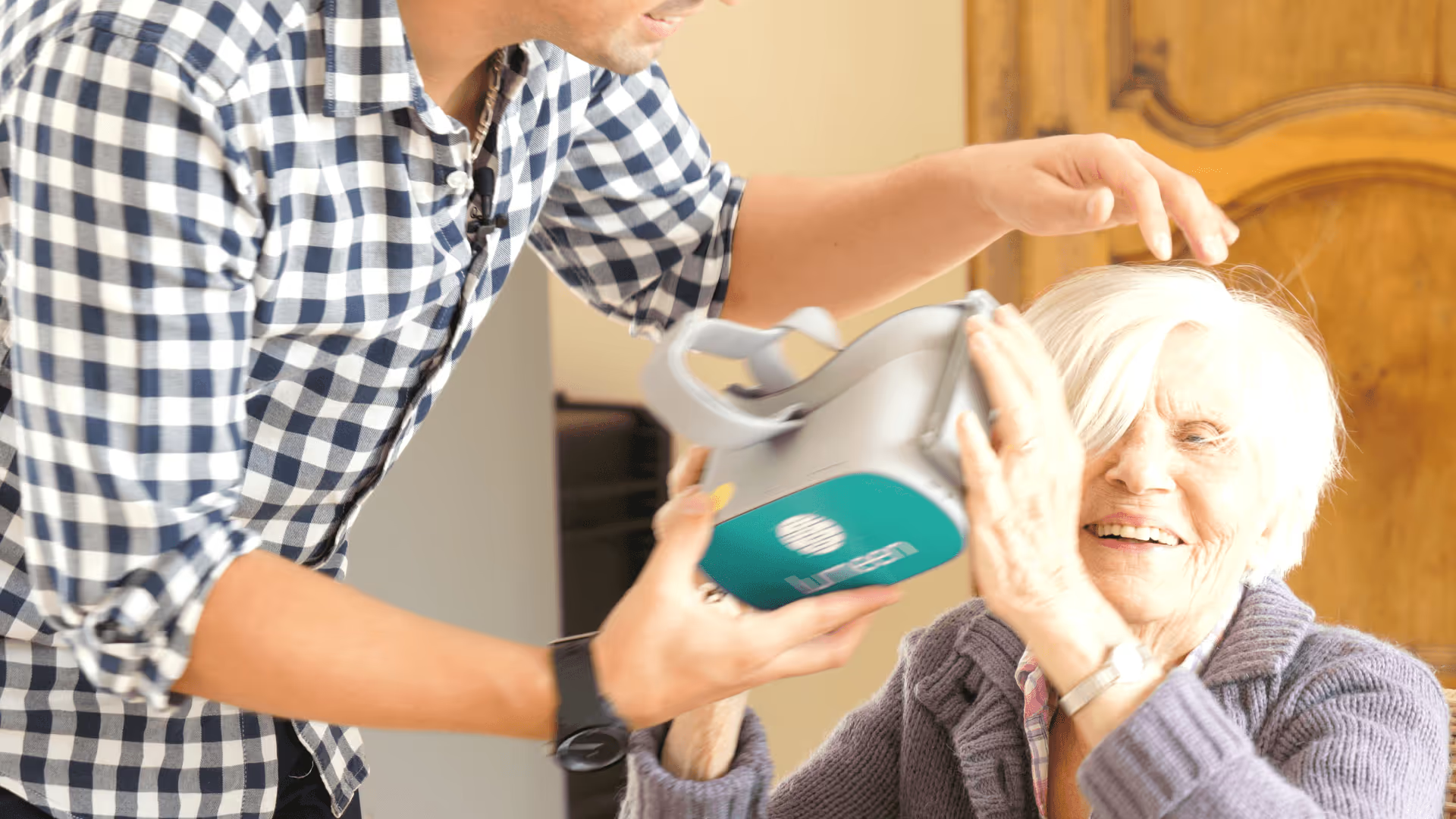
elderly people let themselves be transported by the virtual reality headset. However, encountering a headset of this type for the first time can make seniors feel uncertain or even frightened. For virtual reality well accepted, there’s no secret to it: you have to be educational, kind, and patient.
Robin, co-founder of Lumeen, worked for several years asnurse care homes. He explains how he goes about introducing virtual reality to seniors virtual reality the first time.
1. Explain the concept of virtual reality
According to him, the first step is to explain the technology and how it works. Robin explains that referring to virtual reality rather than a headset is more concrete for elderly people. This helps them relate it to something they’re familiar with. “It’s essential to appeal to the residents’ imagination. They need to understand that these glasses will transport them to another environment, in 360 degrees. That way, they’ll be able to see images not only in front of them but also behind them. It’ll be as if they were really there,” says Robin.
"Seniors don't truly realize what virtual reality is virtual reality they're immersed in it. However, explaining to them in detail beforehand exactly what will happen is crucial so that they can fully enjoy the experience afterward."
Robin, co-founder of Lumeen
2. Physically insert the headset
The second step involves physically introducing the helmet. Simply showing the helmet and letting people handle it is enough to make it a trusted tool. “To make it easier for people to accept this headset, you can simply place it in front of their eyes without necessarily securing it behind their head. The main idea is to show elderly people the headset poses no risk, that they are in control, and that they can easily end the immersive experience if they wish,” explains Robin.
3. The Tablet: A Tool for Outreach
Before beginning the immersion experience, it is essential to use the tablet as a mediation tool. This allows residents to preview the experiences and easily choose what they want to see. They can decide to swim with dolphins, take a trip to Thailand, or attend a Cirque Bouglione show! The tablet is therefore a real asset: the introductory materials provided before each immersion session fuel the desire to put on the headset and reduce any apprehension it might cause.
Therefore, the introduction of virtual reality constant support if we want it to be as widely accepted as possible by seniors. It is essential thatactivities coordinator be availableactivities coordinator the session. He or she must be able to answer all questions and provide reassurance throughout the session. Don’t worry—once seniors have tried it out, they’re often the ones asking for more!
The Benefits of virtual reality Nursing Homes
Thirty years of research have demonstrated the clinical effectiveness of virtual reality many fields. It is now time to make this technology available elderly people . Lumeen is currently the focus of a clinical evaluation process aimed at highlighting the benefits of this technology for seniors.
The benefits of virtual reality nursing homes can be social. It promotes well-being, social connections, access to culture, and intergenerational bonds. It can also have therapeutic effects, helping to alleviateanxiety pain, combat depression and apathy, rekindle memories, and stimulate cognitive functions. As a result, virtual reality a non-pharmacological therapy, as it helps alleviate certain ailments and contributes to well-being and an improved quality of life. Find more information on this topic in our article: The Social and Therapeutic Benefits of virtual reality care homes.
Conclusion
Thus, the use of gerontechnologies is a very serious avenue to explore when it comes to addressing the challenge of aging well. Making virtual reality more widely available virtual reality nursing homes is therefore essential. Thanks to Lumeen, we are proud to be offering solutions today to the societal challenges of tomorrow.
References
“6.3 million French people excluded from new technologies.” Center for the Study of Society, http://www.observationsociete.fr/modes-de-vie/exclus-nouvelles-technologies.html. Accessed January 28, 2021.
EHPA - Consulting, Media, and Training. https://www.ehpa.fr/. Accessed January 28, 2021.
Want to test Lumeen for 30 days with no commitment? ?


.jpg)